Sunday, December 31, 2023

Mission Accomplished

Unless a red-breasted nuthatch -- or something even more unlikely -- wanders into my yard today, I am calling this "medium year" complete with a list of 138 birds! Give that at different points in the year I told myself I'd be satisfied at 100, then 120, that's not bad. As I knew from my Intention, accounting would be tricky: as a newish user of ebird, all kinds of species that I certainly identified as an adult, and/or probably had pointed out to me as a kid, appear to be new for my digital life-list. Still, I'd say I hit the mark of six lifers:

Wilson's snipe (1/2, Dutch Gap) doesn't seem like something I'd IDed before. Another birder listed it as one of his notables as Mom and I stepped onto the platform over the wetland, and there it was just a couple of yards away, easy to identify from field markings.

Red-cockaded woodpecker (7/1, Piney Grove, Sussex Co.). My handwritten notes at the top of the notebook page for this outing read: "A very humbling field trip on which most others did things like ID by ear hooded warblers [and keep walking] and I was all 'towhee!'" The trip was planned with the hopes of seeing a red-cockaded; these pine lands are preserved with controlled burns, creating this bird's preferred habitat. We walked for an hour or so before one of the leaders spotted one, many yards -- yet not too many! -- off the gravel road. It didn't scoot to the other side, it didn't fly away. It very obligingly let everyone get a nice look at its field marks.

Limpkin (11/5, Three Lakes Park, Henrico Co.). This stray was blown up to Virginia in a storm, and all fall birders reported it on a listserv and in a Facebook group. It seems to still be there now, so looks like it will winter with us. Once one finds its hangout for the day, it's a mellow and easy to identify wader.

The next few species were courtesy of a guided trip to island four of the Chesapeake Bay Bridge Tunnel. It was a foggy day; we were treated to the automated foghorn sounding! People who regularly get permission to visit said it wasn't their best list for the location, but I had a great time. The gannetts were sleek and gorgeous. Surf scoters have a terrific schnoz! The purple sandpiper obligingly got rather close so we could be sure of it.

Northern gannett 11/20

Purple sandpiper 11/20

Surf scoter (and probably the black scoter, too) 11/20

I'll remain steadfast to the memory of seeing flamingos in the wild when visiting CDF's Florida family in the 90s and am not really counting the strays seen st Pea Island on 9/26. As much as I love to collect things and to keep a list, this year I most enjoyed stuffing my head with birdy memories. On the trail the Pea Island visitor center, swans flew over my head, enormous and wooshing. From one of the scopes inside the visitor center, I thought I'd get a better look at one of the many juvenile tricolored herons, and in the process of looking, I glimpsed a bittern hiding in the reeds. It was there that a friendly birder offered all and sundry directions to spot the flamingos that day. I duly traipsed to the appointed dune at the north end of the Etheridge Bridge and was pretty sure I had them with my binocs. Some folks right behind me offered the view through their scope: clearly large and pink waders! 

Pea Island flamingo view Sept 26
 

Other birdy memories include the excitement of mix flocks: who will I find? Can I catch them all? Today in an effort to be sure a brown-headed nuthatch was on the list, I went to the University of Richmond. The mature pines there hosted one along with a sapsucker, juncos, chickadees, house finches, goldfinches, titmice, and a red-bellied woodpecker. 

There are also the more isolated species, like the summer tanagers in a beautiful bit of maritime forest by the Bay at Kiptopeke State Park. There were no notable birds there, but the soundside trail at Jockey's Ridge Sate Park is another delicious maritime habitat. 

While I am happy birding solo, I joined several group outings this year, with mixed results. Coworker B is always fun and was my buddy for the Chesapeake Bay Bridge Tunnel trip. From there we went to a local park and she encouraged me to list the clapper rails hanging out in the wetlands: if every time it calls you say "there it is again, why can't we see it" you are identifying it. While many were better than me at Piney Grove, all were friendly. One Audubon group at Bryan Park in the summer was disappointing with too many know-it-alls and the fellow who declared it "a bad day for birding." Look, we are outside, the barn swallows gave us a good show darting under our feet as we stood on the bridge, and we saw plenty of old friends. No day birding is "bad." The local Feminist Bird Club met for a talk at Woodland Cemetery followed by birding. The list again featured familiar species but the history talk was good and the company good. I heard ravens while hiking with S in West Virginia, saw a Baltimore Oriole on Upper Lake with other Mount Holyoke alumns, and at Jamestown with K and J, I could barely focus on the ranger giving the tour over the wrens, titmice, osprey, eagles, etc.

Halfmoon Mountain Trail, WVa 3/5

Finally, Mom joined me several times, including the January 2 walk that kicked off the year so well, and for stay at Kiptopeke in November. At Eastern Shore National Wildlife Refuge, we spotted and IDed a little flock of first year black-crowned nigh herons. 

My carpool companion for the trip to Piney Grove was trying to bird in every Virginia county (this year??), which is super ambitious. And since then I've wondered what my next goal might be? There were any number of birds I never go this year: no nightjars because I didn't tent camp; somehow never got a kingbird; no screech owl; no wood thrush. The Merlin app heard warblers and vireos I never got my eye on whose calls were too generic for my ear so I never wrote down. Is the goal "list more in 2024" or is it simply "get better"?


Tuesday, January 10, 2023

Intention

Prodded into action by a variety of factors, the most recent being finishing Noah Stryker's Birding without Borders, in 2023 I plan to either, or maybe both:

- Add six species to my Life List

- See __ % birds on the Virginia Ornithological Society's checklist for the Commonwealth

The first could be done easily with a trip to the U.S. west coast, to Texas, to Florida ("easy" if I were more at ease with solo travel and/or inviting myself to stay with old friends). I could probably even pick up species by cleaning up the document I consider my actual life list, the checklist at the front of a 1980 Peterson's that starts in January of 1988, when I took an ornithology class at Mount Holyoke. Counting my life list from then means that all the birds we saw in Alaska and the loons I saw in Maine with my Girl Scout troop would be new again. Being a book of eastern birds only, though, the dipper and its other Alaska friends don't appear, anyway. Missing, too, are the birds I identified in Palm Springs, Cal. in 2016. Perhaps my real life list now is in Cornell's eBird? Do people who have been birding since before its 2005 (?) launch go back and enter a lifetime's worth of birds into it? Because eBird thinks my life list is only 109 right now. As Stryker ends his Big Year, he thinks that 6,000 is reachable, 1,000 beyond his initial goal. To decide where to go to hit that mark, he uses eBird to show what's not on his list for various countries. I figured out where that feature is and I see lots of things I've never recorded that I know I've seen: the woodcock at the farm, cedar waxwings -- oh, bother: gadwall. Mom and I saw upwards of 50 on January 2 at Dutch Gap, but I didn't log anything from that outing because I don't love counting and it feels amateurish not to log numbers of individuals. 

It looks like a percent of the Virginia list, in one year, might be more fun, more doable; and could be the mechanism to catch up my eBird list. It does mean that instead of staying in my head all morning, I've got to get dressed and go out on the cold, gray mornings that I work "night" shift. I've got actually to log the birds, either on the paper checklist or online. 


Friday, June 24, 2022

Survival of Memory

The other day I read John McPhee's The Survival of the Bark Canoe (1975) and parts reminded me of the one canoe trip I took in Maine when I was fifteen, a trip that's usually a blip on the memory timeline. Often books with grand outdoor adventures make me feel less-than for not doing that sort of thing all the time. This time I felt wistful, yet also proud of this thing I'd accomplished many years ago. Even if our windy day wasn't as severe as theirs, it was a big challenge for the members of my Girl Scout troop, and having met it, we added another layer resilience to our cores. 

At first place names were the biggest memory trigger. I had it in my head that Moosehead Lake is where we paddled. And then McPhee mentions in passing a leech on someone's leg -- and that struck a deep chord. I'm not much of a freshwater person even now; to that fifteen year old, leeches were new and viscerally alarming.

Reading, I could picture a souvenir map I bought of the region. I didn't think I had it anymore, though, but I couldn't really bring to mind any snapshots of the trip, either. Or then again -- didn't I dig up a picture to post for Mary Sam, maybe when we turned 50? Where are they? McPhee of course is keeping notes for himself on their trip. A couple of the men he paddled with knew their Thoreau and his journalistic The Maine Woods (1864) and while they have a copy, they also can conjure excerpts from memory. Didn't we have BSA-issued booklets, journals for our canoe trip? Gosh, if I had that, where would it be?

As it is for anyone on a packed-out trip, food is a major theme. McPhee notes that the canoe-builder and defacto leader (despite, it turns out, having perhaps the least backwoods or tripping experience) insisted they each pack their own. McPhee and his friend have a variety of things, and McPhee waxes on about Mountain House freeze dried foods. These absolutely were about the major brand in play ten years later when I started backpacking with my Girl Scout troop. I've certainly eaten the meals they did. The canoe-builder poo-poos McPhee's reflector oven. The writer brings it anyway and they all relish the things he bakes for them. Probably, we Girl Scouts used one on my Maine trip; certainly our troops and summer camp units messed around with reflector ovens. I never became anything like expert with them and the sight of one still makes me roll my eyes. 

While he focus of McPhee's narrative is the crafting of the canoes and what it's like to paddle one and care for it, we get his usual digressions into interesting natural history and character study, too. The canoe-builder comes across as a talented craftsman and a bit of a savant, but a terrible leader. While he takes charge and his companions defer to him almost always, we eventually learn that he's been on scant few long trips before this and has no idea which techniques and gear are truly useful. Not only does McPhee's reflector oven redeem itself, the flashlight he was told to leave behind is a clear necessity, too. McPhee teaches everyone (excepting the friend he brought) pray and draw strokes and other crucial paddling skills. Skills I've had since I was twelve or thirteen. Idle canoeing in the Cove at camp and preparing for the Maine trip taught me that. Everything about being in Girl Scout troops taught me leadership and consensus-building.

I found the scrapbook from my trip in the third place I looked. While I certainly would have guessed it was made by Hallmark -- Dad's mom work in an office supply-Hallmark store and kept us well supplied -- the robin on the cover was a surprise. The Instamatic photos must have been cheaply developed; they are faded and yellow-brown. The journal existed and was right there to remind me that it rained lots; that we hit about 160 miles (!); that we had not only the guide provided by the Boy Scout high adventure camp that ran the trips, but also miscellaneous adults I did not particularly remember. Perhaps I didn't have great leadership modeled to me if I don't remember them? Or is that an indicator that they were good and melted into the background? In the official photo of the bus-load that travelled from Richmond were the faces of people I remembered and people I'd forgotten til just that moment.


Wednesday, April 27, 2022

Gentrification Book Reading Notets

 How To Kill a City: Gentrification, Inequality, and the Fight for the Neighborhood by Peter Moskowitz New York : Nation Books, 2017)

Tiny summary: Capitalism combined with state and federal laws to set us up to value real estate over people. Author documents examples in New Orleans, Detroit, San Francisco and New York.

Author's thesis statement: "In every gentrifying city -- that is, in every city where there is a combination of new coffee shops and condos, hipsters, and families struggling to hang on -- you can usually trace they start of that change not to a few pioneering citysteaders but to a combination of federal, local, and state policies that favor the creation of wealth over the creation of community." (p. 23)

Federal examples:

"Regan cut all nonmilitary spending by the US government by 9.7 percent in his first term, and in his second term cut the Department of Housing and Urban Development's budget by an astonishing 40 percent, hobbling cities' ability to pay for public housing." p. 42 

GI bill's focus on home ownership fostered suburbs, broke habit of multi-generational living

FEMA's failure to serve black New Orleanians post-Katrina

Misc

Quotes Jane Jacobs: "'Private investment shapes cities, but social ideas (and laws) shape private investment. First comes the image of what we want, then the machinery is adapted to turn out that image.'" p. 68

Urbanist Richard Florida with 2002 book The Rise of the Creative Class is a leading force in hyping the creative class at the expense of the poor, working, and even middle class. Emphasis on creating cities or districts that cater to the needs and tastes of this group at the expense of others (who were generally in the districts first). (See section beginning p. 78)

Viral video in San Francisco captured white men bullying Hispanic people off a city soccer field because the former paid for the time and the people who'd always lived in the neighborhood followed the practice of the community. Moskowitz sees this as an example of how "[a]s our cities' landscapes have changed, we have too, increasingly viewing ourselves not as community members with a responsibility to each other but as purchasers of things and experiences. This is what pissed off Hugo the most -- the idea that these people felt they had more of a right to space than he and his friends; that the amount of times spent in a community and the traditional way of doing things, of accessing public space, did not matter and only money did." (p 136)

"How do you begin to form a tenants movement in a city where many residents feel like consumers of luxury products, not community members?" (p 215)

Local

Tax breaks favor Twitter over small-business owners; they bring in the massive stadium and its team with expensive tickets and demand for mostly service-wages jobs to support it.

Localities put incentives in place for real estate or tech companies rather than making sure people's basic needs met. Once those companies arrive, rents go up and businesses open that cater to richer people meaning people who had been living there have to go further for basic needs. See Detroit's "7.2" (beginning page 91) for example. "The people who are benefiting from all these subsidies -- the gentrifiers of the 7.2 -- do not seem to realize the work that has gone into bringing and keeping them here. They consider themselves cunning pioneers ... ignoring the fact that hundreds of millions of dollars that could be used to keep [Detroit native now displaced] Cheryl West in their homes...." p. 95

"The suburbs were the prototype for gentrification, not aesthetically but economically. Suburbanization was the original American experiment in using real estate to reinvigorate capitalism. Gentrification can be understood as a continuation of that experiment .... The suburbs are also a good reminder that housing, planning, and economic policy in the United States is deliberate, and that its main purpose is to produce money not adequately house people." (p. 147)

Given that urban gentrification pushes poor people to the suburbs, "The suburbs are being reused, reconfigured, and repopulated. They are becoming poorer, and that has wide-ranging implications for policy and the lives of lower income people." (p. 147) 


Moskowitz's concluding suggestions (p 209-13)

Expand, protect, and make accessible public lands. 

Give people an actual say in what happens in their city.

Heavily regulate housing. (e.g. rent control)

Implement a New Deal

End protectionism, add infrastructure. 

Raise taxes, raise wages, spend on the poor.

Tuesday, February 01, 2022

Boontonware

cream and sugar at my house


Today I learned that Boonton melmine dishes, the sturdy dishes gracing my Girl Scout camp dining hall, were designed by a woman named Belle Kogan (1902-2000). She studied mechanical drawing in high school and studied briefly at the Pratt Institute in New York. 

Boonton was promoted as stylish and sturdy -- indeed the company would replace pieces you broke. Lucky for them, we didn't know this at camp, where we made an art form of breaking them by forcing them into dish washing baskets. 

To learn more about Kogan, I especially recommend this website which considers a variety of drinking vessels and highlights the Boonton coffee cup. The researcher notes, “Kogan worked with many different media including silver, aluminum, ceramics, glass, plastic, wood and cloth and was one of the first industrial designers – man or woman – to experiment with plastic. Her 1950s lines of plastic dinnerware for Boonton Molding Co. was particularly popular and was purchased widely.” 

Additional Reading

Entry on the Cooper Hewitt's website; includes some of her drawings (such as the 1958 rendering of the sugar bowl lid below) as well as the pieces themselves.

Cooper Hewitt Museum

Cream and sugar in the collection of the Boston Museum of Fine Arts.

Article in industrial design magazine Core 77, from 2015. 

Very artsy shots (you may have to click on each to see them fully) at another design website.

Saturday, March 20, 2021

Juxtaposition


I liked the way these covers looked together on my Goodreads page  


Tuesday, December 29, 2020

Recommended 9: Isolation

Isolation is a word that can encompass living with or seeing with a few -- or a few dozen -- others, such as on a wildfire-fighting team, or if you launch into space (or just role-play the latter). I do okay leading a solitary life, and some days seeing 5 or 6 coworkers (plus some patrons, but always for just minutes at a time) is more than enough people time for me. Yet for two nights in a row, explosions on TV made me jump way out of proportion to their loudness, and I recalled Kate Greene writing that isolation, boredom, and/or the same environment for a length of time dulls your senses; your days "smooth over, lose their texture." (p. 115) 

In the last two days I finished up a book about a practice Mars mission, listened to an episode of This American Life episode ("Boulder vs. Hill," aired 12/18/2020), and got lost in Susanna Clarke's new book, Piranesi. Plus, you know, I spent most of 2020 not seeing people, even for holidays. I've been deep into thoughts on isolation.

If you'd like copy my deep-dive into feeling isolated -- and to come out feeling generally okay about it -- check out: 

The This American Life episode called "Boulder vs. Hill." It has just two acts, each featuring huge 2020 civic undertakings. As I listened to the act about  fighting wildfires, I made connections to to Kate Greene's book about an earth-bound Mars mission practice. The firefighters work in bigger teams; the faux astronauts had a greater variety of tasks. Both groups felt that those back home didn't understand the importance of their work.

Once Upon a Time I Lived on Mars, by Kate Greene. 

Journalist Kate Greene spent 4 months living in a geodesic dome in Hawaii to help gather data about both food variety for astronauts and insights into close-quarters life. Each chapter is a reflection on a different topic or experience, though of course themes of isolation and getting along continue throughout. A good general read on space sciences.   


Piranesi by Susanna Clark 

There are just 15 of them, and only two living: the Other and the narrator, whom the Other calls Piranesi. Piranesi tracks the tides, talks to the birds, catalogs the statues. The Other has been working on immortality and other projects. One day Piranesi suggest that's not a good use of time, and the Other reminds Piranesi they've had this conversation before, that he gets confused. Furthermore, he should be alert to someone new appearing, someone dangerous. These conversations lead to Piranesi digging back in his old journals, which leads to him question his understanding of reality.

Dreamy and page-turner-y and compelling; set in a liminal space like Lewis's Wood Between the World or maybe Lev Grossman's Library. Given that the Other sees Piranesi only twice a week, a pandemic-worthy meditation on being alone. 


Thursday, October 01, 2020

Thick: And Other Essays

Thick: And Other Essays by Tressie McMillan Cottom
My rating: 5 of 5 stars

Tough issues illuminated in prose that I’d call “conversational,” but she uses footnotes, so maybe I can’t.

"Because I was such a big deal to an actual big deal, the black man seated to my left made a great effort at small talk. I wish he had not bothered. I hate small talk. It is small. Small is for tea cups and occasionally for tiny houses. Too much small talk is how a country is given to sociopaths who thrive on shallow chatter to distract their emotional sleight of hand. Talk should be meaningful or kept to a minimum."

View all my reviews


Saturday, May 02, 2020

Oh No Not Again

Fifteen years ago, I didn't really want to build another life and another persona with SecondLife. Why would I take time away from creating my primary life to build an alternate Lisa and an alternate house, public library for her? It with that same weary mindset that I read about the metaverse and the likelihood of it launching out of (violent) gaming. The only appealing part of it, from my read of this Washington Post article would be that it's a unified platform - a single space. No separate logins, vocabularies, currencies.

Saturday, April 11, 2020

Recommended 8


Jill Lepore in The New Yorker describes two essential structures for "plague novels": stories set during a time of sickness and quarantine, and those "set among a ragged band of survivors." She cites many, beginning with The Last Man (1826) by Mary Shelley, that end with a portrayal of society having regressed.

And that, in the modern plague novel, is the final terror of every world-ending plague, the loss of knowledge, for which reading itself is the only cure.

 Maybe today is the day, then, to recommend Station Eleven by Emily Mandel. In this plague novel we do experience the lock-down quarantine and also the time after. In the after times, a man curates a archive of artifacts in the airport in which he and others live, and a band of musician and actors roam the land putting on Shakespeare's plays, because "survival is insufficient." Mandel gives us a hopeful ending.

If there are again towns with streetlights, if there are symphonies and newspapers, then what else might this awakening world contain? Perhaps vessels are setting out even now, traveling toward or away from him, steered by sailors armed with maps and knowledge of the stars, driven by need or perhaps simply by curiosity: whatever became of the countries on the other side?

Wednesday, April 08, 2020

Are We on Web 3.0 Now?


The other day, a colleague asked me to remind her about the 23 Things initiative we did when we worked together. It sounded like she was looking for structure to guide people in their self-teaching activities while working from home. I used my 23 Things tag to direct her back to some of the original posts. At the same time, I glanced at those "web 2.0" posts and the things we were excited about then: mashups and widgets; Flickr and BookThing.

I'm also taking a look at the sidebar on this site and culling dead links. In the early 2000s, I liked sites that were internet directories and portals. Before search engines gained strength, these directories reliably pointed users to credible sources. I used them on the ref desk all the time. Now it seems that one of them, the Internet Public Library has become a very bad essay farm? Only it acts like it belongs to Barnes & Nobel??

Library Spot appears to be active and useful still. Here's a page of links to directories: one or two patrons do call my current branch to have us look up phone numbers. Sometimes it's straightforward, but with personal numbers or address you can get bogged down in ads and paid sites. 

Hmm: YALSA book lists is dead and can go; most of those other blogs are long gone. Weird how my early online connections were mostly with strangers. No, wait, that's not right. I follow famous people on Twitter and witty strangers on Tumblr. It's really only Facebook where everyone is someone I actually know.


Recommended 7

99% Invisible on toilet paper.

Tiny Pantone matches on Tumblr.

"Stephen King is Sorry You Feel Like You're Living in a Stephen King Novel" on Fresh Air

Saturday, April 04, 2020

Recommended 6: News Sources

The Washington Post makes COVID19 related articles freely available, here.

The New York Times makes COVID19 related articles freely available, here.  

Quality coverage for Virginia includes
Central Virginia COVID dashboard.
Virginia Mercury
Richmond Times-Dispatch

Thursday, April 02, 2020

Recommended 5

My folks aren't interested in FaceTiming me. They're retired and not trying to #wfh. They live in rural Virginia and have terrible internet speed. They're not talking about zoom or new podcasts or what restaurant has pick up now. Mom's pretty tech savvy; Dad, not so much. Thus I am surprised to tell you that today's recommendation for something to do while isolating comes to you from Dad. He recommends the "takeout" art talks from the Barnes Collection, available here on YouTube. More online offerings from that museum are here.

Red Headed Girl in Evening Dress by Modigliani

Also recommending the storytimes my library system is presenting online (those videos won't stay live for very long). Loving the new-to-me song that Jodi sings, "Knife Fork Spoon Spatula."

Tuesday, March 31, 2020

Recommended 4

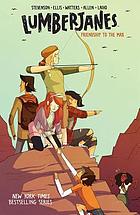
Break out of your claustrophobia with the Lumberjanes! Sure you should start at the beginning, but Indoor Recess is my quick pick today.


Lumberjanes : indoor recess

Saturday, March 21, 2020

Recommendations 3

The Librarian is In, a podcast from the New York Public Library, made me want to be better at readers' advisory (the practice of recommending books to all kinds of readers). General interest listeners will come away with additions to their To Read list. This year's first discussion of a book on the NYPL 125 list prodded me to read Giovanni's Room, a title always lurking on my "should have read" list.


I always describe my GoodReads reviews as "notes to myself" rather than proper reviews. Here's what I jotted down:

Giovanni's Room
Passion and the futility of love in Paris in the 1950s.

While David's girlfriend tours Spain without him, he gets evicted from his Paris hotel. He turns to an older man he knows, someone who often helps "boys" like him. They go to Guillaume's bar and both immediately become enamored of Giovanni, the bartender. The larks and liaisons of this (gay) crowd roll along at a leisurely, drunken pace until girlfriend Hella returns. Only, the book tells the story out of order: sooner than we see those scenes we know that something terrible happened and that David and Hella definitely aren't getting married.

(Lots of undergrad paper / book club themes to mine: "room[s]" and being trapped; the way the characters -- Baldwin? -- view women; the caricatures of the older men.)


Thursday, March 19, 2020

Recommendations in the Time of COVID19, part 2


Graphic Novels and the Like


Many public libraries buy into the digital hoopla collection for their patrons -- this service offers music, steaming video, and books including comics and graphic novels. Henrico's collection includes Joe Hill's Locke & Key which you may have gotten sucked into via Netflix (surely that wasn't just me?)


hoopla 220

Some things I've read recently that I recommend are below. If you're here in Richmond, local booksellers are delivering. I know Chop Suey will order books for you.

Chop Suey Books

Fountain Bookstore

Small Friend Records & Books


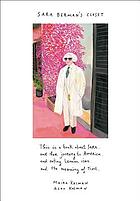
Sara Berman's Closet

A great example of the art -- photos and paintings -- being as much of the point as the biographical story of a Greenwich Village personality.

Sara Berman's closet


Spill Zone

When Scott Westerfeld brings his A game, it's an A+. He captures young people's voices well and brings us amazing post-apocalyptic visions. This cover doesn't do the art justice: Puvilland uses vivid color to convey the spill zone itself.


Spill zone. Book 1'


Jumberjanes

Lumberjanes

I approach things that are Girl Scout or summer camp-adjacent with trepidation. I fear lack of the proper reverence, knowledge, or simply not getting it. The creators of Lumberjanes get it and have nothing but love for girls' camps. In this series, our heroines take on magical monsters, champion friendship and teamwork, earn badges -- and try to make curfew.

Tuesday, March 17, 2020

Recommendations in the Time of COVID19

Tuesday

Listen to Bill Nye and Alan Alda chat over tea about science and communication.

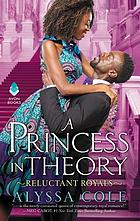
Read a romance in which a NYC epidemiology student keeps ignoring the emails from "an African prince" -- so he shows up at her door. Princess in Theory, by Alyssa Cole.

A princess in theory : reluctant royals. Book 1

Monday 3/16/20

Read the Lager Queen of Minnesota and spend time with generations of a midwestern family as they shift form farmers to service workers; able-bodied to creaky; highschoolers to grandparents. Also: beer-making and family drama.

[Cover]

Listen to a light-hearted romp through copyright, intectual property, and dance hits with 99PI's episode, Whomst Among Us Has Let the Dogs Out.

Last Week

"Dad Ward" put together a super-informative Virology podcast for us. Link to that Ologies episode.

Friday, April 05, 2019

All Aboard

Fastrack acquired and assembled; transformer got a check up. We're rolling!

Note for future:
White wire to top terminal.
Don't put freshly-greased engines on carpet.